

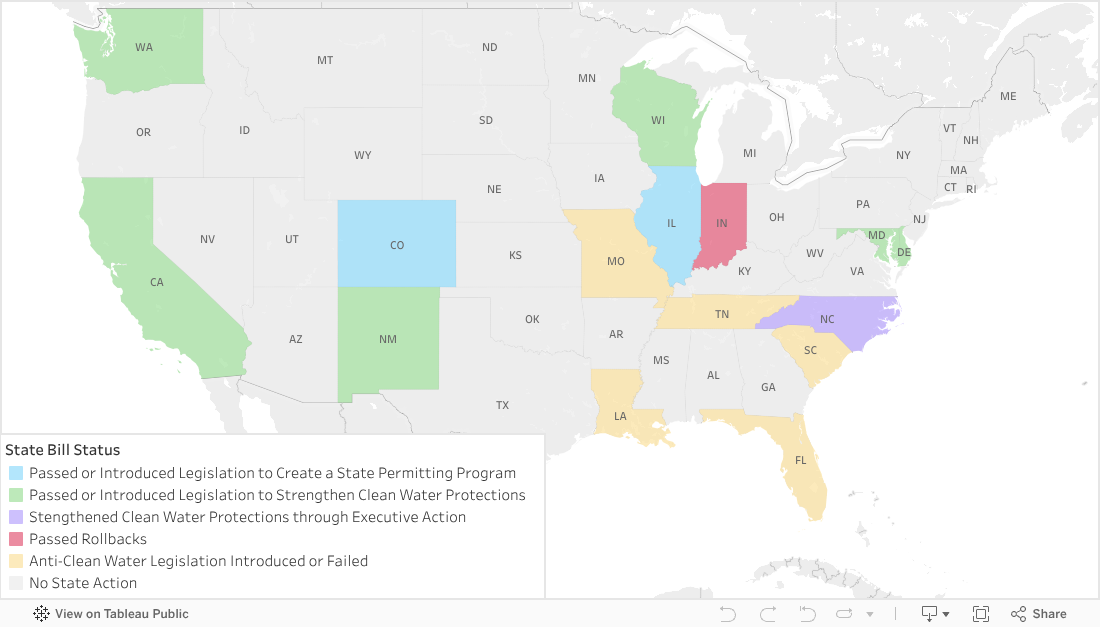
Map of Changes to State Water Protections Since the Sackett v. EPA Ruling in May 2023
The Protect Our Waters Campaign developed this map to show the legislative and administrative trends across the country since 2023. We hope it can also serve as a jumping off point for potential opportunities for coordination across states. The map shows both proposed and passed changes to protections. It does not reflect the relative strength of protections within the state or make comment on any laws or regulations enacted prior to the Sackett decision in 2023. It also does not does quantify the scope or scale of the change in protections in each of the actions taken. See additional information below the map about resources from partner organizations that speak information not conveyed on this map:
For more information:
Lawyers for Good Government (L4GG), and its pro bono attorney partners, compiled a dashboard of existing water and wetland protections at the state level for all 50 states as well as the District of Columbia and Puerto Rico to catalog and evaluate what state-level protections exist for wetlands and what state-level protections are missing follwoing the Sackett decision.
Natural Resources Defense Council used Geographic Information System (GIS) modeling to analyze federal geospatial databases of water resources across the continental United States and produced estimates of the number and extent of continental U.S. wetlands and streams that would lack protection under the Clean Water Act, depending on how the Court’s decision is interpreted.
Earthjustice compiled a map showing which states’ wetlands are most at risk in the immediate aftermath of the Sackett decision based on the extent of their existing wetland and stream protections. This was last updated in May of 2024.
Sackett v. EPA: The State of Our Waters One Year Later
In 2023, the Supreme Court issued its sweeping decision in the case Sackett v. EPA, which invalidated federal Clean Water Act protections for most streams and wetlands in the United States. Since then, the fight for clean water protections has been at the state level. This report, published in May of 2024 outlines the state of clean water protections one year out from the Sackett decision and why federal protections for our critical waters is vital in the face of worsening climate change and other threats.
